

#Vinyl Test : Miles Davis, "Birth of the Blue" - Where Genesis Precedes the Legend.
- Jean-Philippe Burgos

- il y a 5 heures
- 5 min de lecture
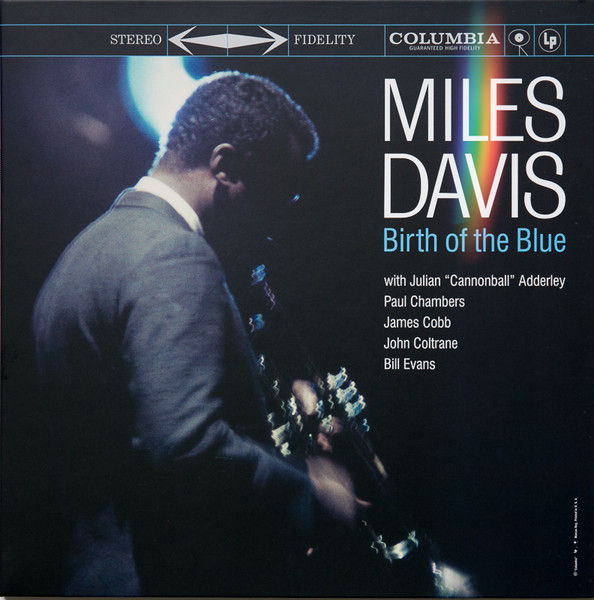
On May 26, 1958, at Columbia's 30th Street Studio in New York, six musicians came together for a session that would remain shrouded in obscurity for more than six decades.
Less than a year before Kind of Blue—the best-selling jazz album of all time—would come to be, Miles Davis was already assembling his legendary sextet in this converted former Armenian Greek Orthodox church, whose soaring vaults lent Columbia recordings an acoustic resonance of uncommon grandeur.


©Sony
Analogue Productions has at last rendered justice to this session with Birth of the Blue, an audiophile pressing that revives four pieces long relegated to bonus track status, dispersed across various compilations.

Jazz historian Ashley Kahn, author of the definitive Kind of Blue: The Making of the Miles Davis Masterpiece, provides the liner notes for this inaugural standalone edition.
And he rightly asserts that these recordings merit their own release—musically, historically, indisputably


Line-up on the "Kind of Blue" sessions later on March 2nd et aprill 22th 959.
The Birth of a Fleeting Constellation
Less than two weeks—that's all that separated this sextet's first rehearsal from their studio date. Miles Davis on trumpet, John Coltrane on tenor sax, Julian "Cannonball" Adderley on alto, Bill Evans on piano, Paul Chambers on bass, and Jimmy Cobb on drums: a constellation that would exist for merely eight months, yet leave an imprint spanning decades.
This formation was anything but random. Miles, that genius of musical intuition, grasped that something new was taking shape. Ever since the Milestones sessions, he'd been exploring modes—those modal scales drawn from modern classical music rather than bebop's chord changes.
Modal jazz remained merely an intuition, a direction barely outlined.
But Davis, forever the explorer, felt he'd discovered a pathway to sophisticated simplicity, a paring down that would open more room for improvisation.

Columbia 30th street recording studio " The Church" 1958
The exact circumstances of this May 26th session remain enigmatic. Kahn posits two theories: either the ensemble was performing in the area and was impromptu summoned to the studio by Columbia management, or Miles merely sought to evaluate the group's interplay in a recording setting.
Regardless, that day bequeathed us four tracks of breathtaking beauty: "On Green Dolphin Street," "Fran-Dance" (the sole Davis original), "Stella by Starlight," and "Love for Sale."
Unearthing a Technical Gem
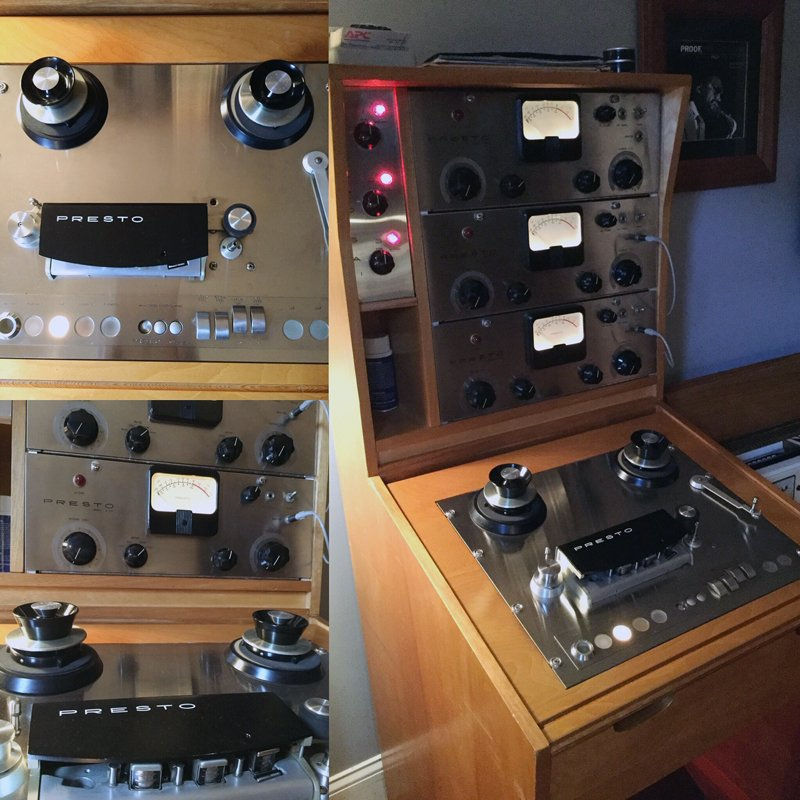
3 track Presto Recording machine
For this edition, Analogue Productions spared no effort. Chad Kassem's company, a global benchmark in audiophile vinyl production, sourced the original 3-track session tapes. Meticulous restoration work was assigned to Vic Anesini, senior mastering engineer at Battery Studios, who generated a new stereo master tape at 30 ips on quarter-inch format.
From this audio source, Matthew Lutthans at The Mastering Lab (now under Analogue Productions ownership) cut the lacquers at 33 1/3 rpm, employing Doug Sax's legendary all-tube electronics and cutting lathe.

The stampers were then pressed onto 180-gram vinyl at Quality Record Pressings in Salina, Kansas—Kassem's pressing plant.

©Sony
The entire presentation comes in a Stoughton Printing tip-on gatefold jacket with scratch-resistant matte finish, its artwork evoking with remarkable precision the Columbia releases of 1959. Even the record's center labels replicate the period-correct "six-eye" stereo design.
This commitment to visual authenticity transcends nostalgic gesture: it establishes a historical continuity that immerses the listener in the era's authentic context.
An All-Analog (AAA) Edition Beyond Time
"On Green Dolphin Street".
The spatial imaging is arrestingly natural, precisely restoring the musicians' placement within the 30th Street studio. Bill Evans's solo piano introduction appears on the left, then Miles's trumpet emerges, clear as crystal. Paul Chambers and Jimmy Cobb hold the center, followed by Coltrane's solo slightly right, then Adderley. When Bill Evans takes his turn, the natural reverb literally envelops the piano phrases.
This edition accomplishes a paradox: a sound simultaneously fresh—with clarity and dynamics that will astonish even longtime listeners—and authentically vintage, retaining the sonic character of late-1950s Columbia recordings.
Bill Evans, whose work I've never concealed my admiration for, commands a magnificent presence here. His delicate touch, that singular way he caresses rather than strikes the keys, each piano note filling the space with trailing harmonics. The rhythm section—Chambers and Cobb—provides unwavering grounding without ever masking the soloists' subtleties.
On "Love for Sale," my preferred selection from this set, the animated tempo provides each soloist space to flourish in turn. Coltrane, already investigating what would become his renowned "sheets of sound," engages with Cannonball's incandescent alto. Dynamic range is preserved end to end: the Quality Record Pressings manufacture demonstrates its full refinement here, with surface noise nearly absent.
"Stella by Starlight" and "Fran-Dance" complete this snapshot of an ensemble in exploration, capturing that impromptu blowing session energy Kahn characterizes so precisely. This isn't yet the architectural mastery of Kind of Blue, that modal construction landmark the sextet would record ten months later. It's instead the laboratory, the atelier where instincts are refined into certainties.



©Sony
What about Digital ?
An SACD format edition is also available from the label.
The streaming platform Qobuz offers this album in high resolution (24-bit/192 kHz), providing a compelling digital alternative. Spectral analysis via Audirvana Studio 's Audioscan function reveals a signal extending beyond 20 kHz, with components reaching 96 kHz—a frequency extension that reflects the quality of the original transfer. The impressive dynamic range enables faithful reproduction of every nuance

Audioscan is an exclusive feature of Audirvana Studio that verifies digital files are what they claim to be. This 24/192 file checks out as authentic.
However, the vinyl edition retains a midrange quality and harmonic richness in the spectrum that brings an emotional connection to the listening experience that's difficult to equal.
Why Have These Tracks Remained in the Shadows So Long?
The question deserves to be asked. These four titles have appeared over the years on various compilations—Jazz Track in 1959, Basic Miles in 1973, 1958 Miles in 1974—always in secondary position, as mere supplements. Columbia Records, as prolific in the 1960s as Blue Note, likely considered a compilation the most appropriate format for this apparently improvised session.


©Analogue productions
Rediscovering the Missing Link
Birth of the Blue is a missing link—the prelude to a masterpiece, the moment when everything remains pure promise and experimentation. This edition comes at the ideal moment to remind us that great works don't appear from nowhere. They are built, searched for, groped toward.
On May 26, 1958, in that converted Manhattan church, six men were still finding their way. Less than a year later, they would succeed. But that day, they left us something equally invaluable: evidence of an alchemy taking form, a miracle in becoming.
Verdict GuideAudioPassion
Music : 10/10
Audio Quality : 10/10
Vinyl Edition : Exceptional
Historical interest : Major
Analogue Productions' limited vinyl edition is available in black vinyl and limited edition blue vinyl.
For those who wish to discover this recording before committing, the hybrid SACD is available from Acousticsound and high-resolution streaming is available on Qobuz, where you can appreciate the exceptional quality of this 24-bit/192 kHz transfer.

But take it from my experience: nothing replaces the complete audiophile vinyl experience, with its meticulously crafted period artwork and that physical presence only a quality pressing can deliver.
Birth of the Blue is not merely a record for Miles Davis enthusiasts. It's an essential document for anyone interested in the genesis of modern jazz, that precise moment when a genre veered toward uncharted territory.
A record that finally emerges from the shadows to claim its rightful place in history.
More infos : Analogue Productions
Listen Qobuz : [Version Hi-Res 24bit/192kHz]


